Skip to content
LakeScugog Garage Door Repair Co.Open 24/7 (289) 513-8434
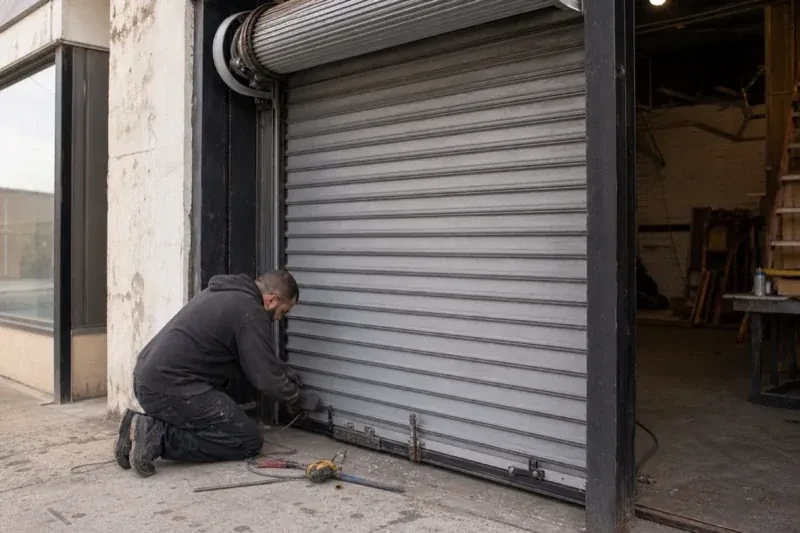
Person kneeling beside the bottom of a metal rolling door with tools on the ground — Commercial Rolling Door Repair, Hampton

New Doors · Hampton

Commercial Rolling Door Repair

The labelled rolling fire door still moves from its control, yet the release assembly and closing path were disturbed during nearby work. The facility needs the repair and return-to-service record handled as a fire-door scope.

In plain words

Powered rolling doors add controls and protective devices to the mechanical assembly. A closing complaint may begin at the control station, interlock, sensing edge or photoelectric sensor rather than inside the operator. The visit checks the curtain's free movement first, then follows control response, brake action, limit settings, manual disconnect or hoist and external protection suited to that system. Compatible repairs are completed with the operating instructions in hand. Testing covers normal commands, stopping points, manual operation and protective-device response so staff understand how the restored door is intended to behave.

Sound familiar?Hampton

The call
Cold-weather moisture has frozen the bottom seal to the sill, and salty grit has collected along the guide entrances. The door chatters during its first cycle and leaves a visible gap after it reaches the closed limit.
NextHow the visit goes

Commercial Rolling Door Repair · Hampton

How the visit goes

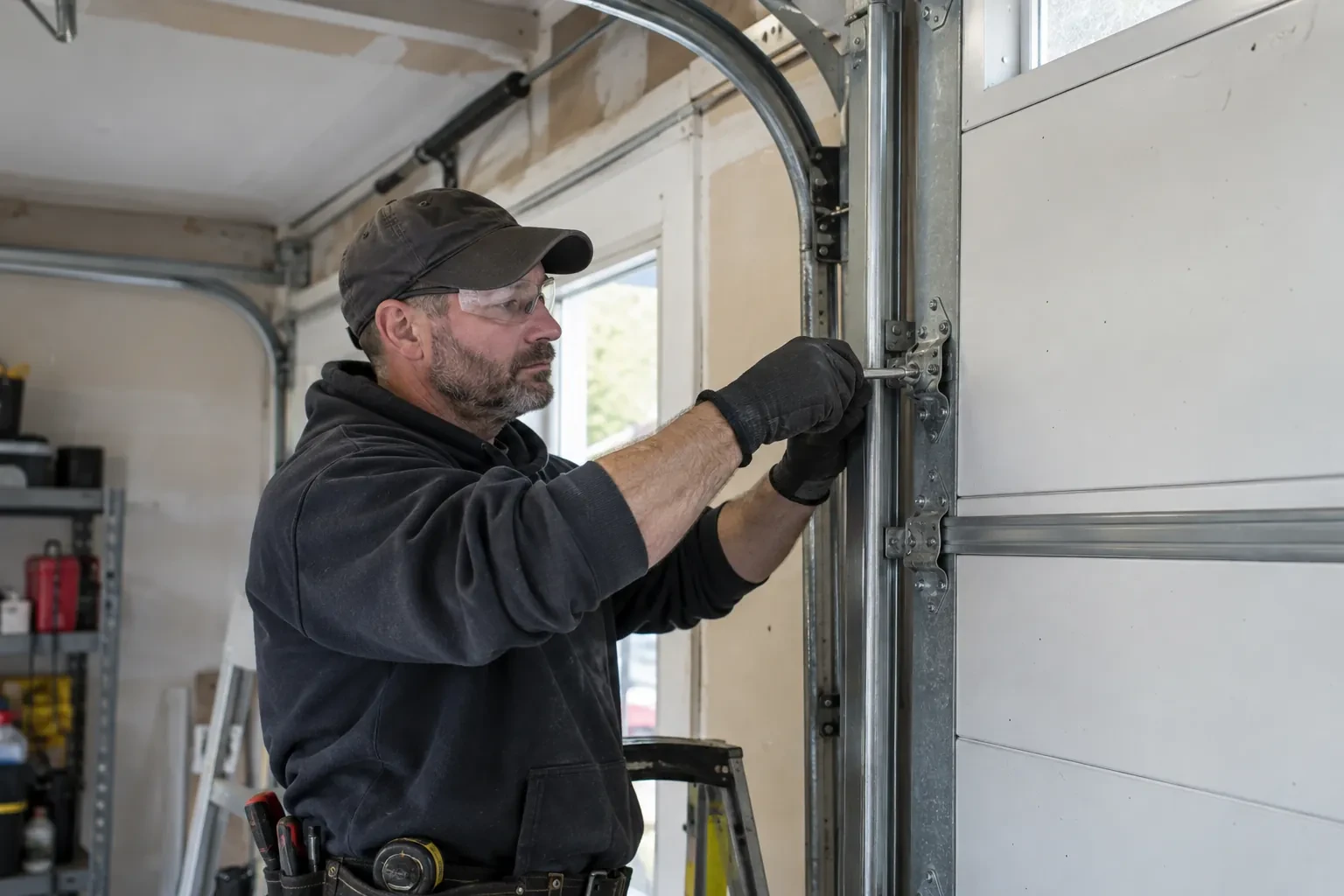
Technician in a dark cap and safety glasses holding a small metal tool against a hinge bracket on the vertical door track. — Hampton
  1. Scene 1

    Assess barrel support and counterbalance

    Above the opening, the barrel, headplate brackets, bearings and counterbalance carry the curtain and shape its operating effort. The technician looks for bracket movement, worn-bearing sounds, loose drive connections and signs that the curtain has walked sideways. Balance is evaluated only after the door is secured and the operating method is understood. A door that rises by itself, drops from a set position or feels heavy through part of its travel may need mechanical correction, while a consistent rough spot may trace to a bearing or distorted coil. This check keeps the operator from masking a mechanical load problem.

  2. Scene 2

    Restore the bottom bar and closure line

    The bottom of the door determines how it meets the floor, carries locks and engages a sensing edge when fitted. A twisted bar is straightened or renewed within the agreed scope, damaged retainers and astragal are replaced, and slide bolts or cylinder-lock parts are aligned only after the curtain hangs square. For a powered assembly, lock interlocks are checked so an engaged lock and an operator command cannot work against each other. The close limit is then set to bring the seal into suitable contact without crushing it, leaving the doorway even and ready for a clear locking test.

  3. Scene 3

    Controls with clear, separate functions

    The handover distinguishes the wall station, key control, access input, photoelectric protection, sensing edge and any vehicle-detection accessory. Each device is demonstrated according to its role, and staff see the applicable response during a controlled test. Sensor lenses remain visible and clean, cables stay protected, and stored materials are kept outside the beam path. Private access codes are retained by the facility rather than written in a service record. With the functions separated clearly, a blocked beam can be handled as a housekeeping clue while an unusual operator response can be reported with useful detail.

In the van

  • Guides and bellmouths
  • Curtain slats and endlocks
  • Sensing edge and controls
  • Photoelectric sensors
  • Counterbalance spring assembly

What shapes the quoteLake Scugog Garage Door Repair Co.

Bottom bar and sealing needs
A twisted bottom bar, torn astragal, worn retainer, sensing edge and misaligned slide bolts are distinct items. Floor slope and threshold condition also influence the closure-line work.
Curtain position when work begins
A curtain resting closed, stopped mid-travel or held near the hood presents a different securing and access plan. Its position affects how components can be reached and supported.
Extent of curtain damage
One serviceable slat differs from a distorted group that has pulled endlocks sideways or damaged the coil. Material, profile, finish and number of affected curtain pieces guide the scope.

FeesSame any hour

Have it ready

Before you call · 0 / 3

(289) 513-8434

Before you book

What does it mean when the door feels unusually heavy?

A marked increase in manual effort often calls for a counterbalance and mechanical-path assessment. Spring setting, barrel bearings, guide friction, curtain damage and drive parts can all contribute. Because the counterbalance contains substantial stored energy, the curtain is secured and the assembly is adjusted with the identified procedure and proper winding tools.

What makes a rolling door different from a sectional overhead door?

A rolling door uses interlocking slats or a flexible sheet that coils around a barrel above the opening. A sectional door uses hinged panels that travel along horizontal or vertical tracks. Their guides, counterbalance arrangements, clearances and repair parts differ, so identifying the construction before service is an important first step.

Why is there a grinding or clattering sound near the hood?

Noise at the head can come from worn barrel bearings, loose brackets, misaligned drive chain or sprockets, shifting slats, an uneven coil or hardware contacting the hood. The pattern matters: once per revolution suggests something different from continuous guide scrape. Controlled observation locates the source before a specific part is selected.

Hamptoninformation

DurhamOntario

Town
Hampton, Durham
In business
12 years
Hours
Open 24/7
Nights, weekends and holidays, same fees
Visits
On-site assessment preferred. Request a visit or call.

2021 census: what it means at the door

Every square is one home in a hundred.

  • 27 in 100 homes · newer homes
  • About 27% of homes in Clarington were built in 1980 or earlier, according to the 2021 Census.Newer houses often have a double door over a two-car garage, which means a heavier door, a pair of torsion springs and cables that must be matched exactly. Replacing springs on these doors is done in pairs so the door lifts level and the opener is not fighting one side.
  • Single-detached houses make up about 78% of homes in Clarington (2021 Census).Where most homes are single-detached, nearly every property has its own garage door and its own opener, and the homeowner makes every decision about it. That makes for straightforward visits: one door, one owner, and a repair or replacement chosen at the house without anyone else to consult.

Source: Statistics Canada, Census Profile

Open Hampton in Google Maps

On-site assessment

Request a visit.

The labelled rolling fire door still moves from its control, yet the release assembly and closing path were disturbed during nearby work.

(289) 513-8434, open 24/7.