Skip to content
LakeScugog Garage Door Repair Co.Open 24/7 (289) 513-8434
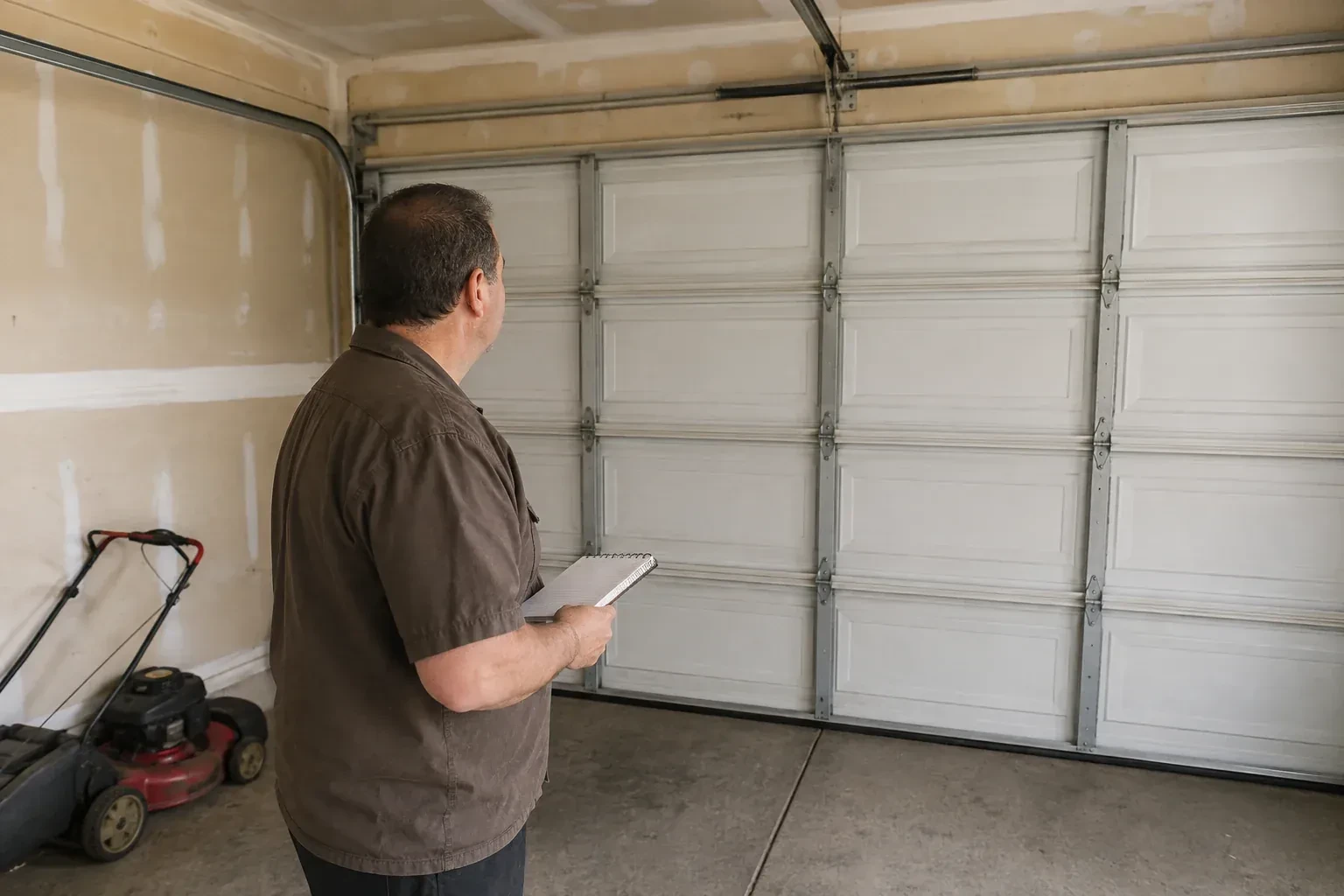
Technician holding a notebook while looking at a closed sectional door. — Garage Door Balance Adjustment, Clarington

Springs · Clarington

Garage Door Balance Adjustment

With the door closed, daylight shows under one bottom corner and the seal is squashed flat at the other. As it rises, the left side leads by an inch or two, and the top section twists slightly as it turns into the horizontal track.

In plain words

What you get back is a door that lifts with light, even effort and a written note of how it was set. It holds still at knee height, at waist height and fully open, closes onto the floor gently along its whole length, and rises without twisting. The opener sounds relaxed because it is steering rather than lifting, and it reverses cleanly when the safety tests are run. The technician tells you how many turns the springs carry, whether any parts are nearing the end of their life, and how to repeat the hand test yourself each season so you notice any drift early.

Sound familiar?Clarington

The call
Released from the opener, the door will not hold anywhere. Lift it to hip height, take your hands away, and it sinks back to the concrete, gathering speed on the way down. Two years ago it used to hover exactly where you left it.
NextHow the visit goes

Garage Door Balance Adjustment · Clarington

How the visit goes

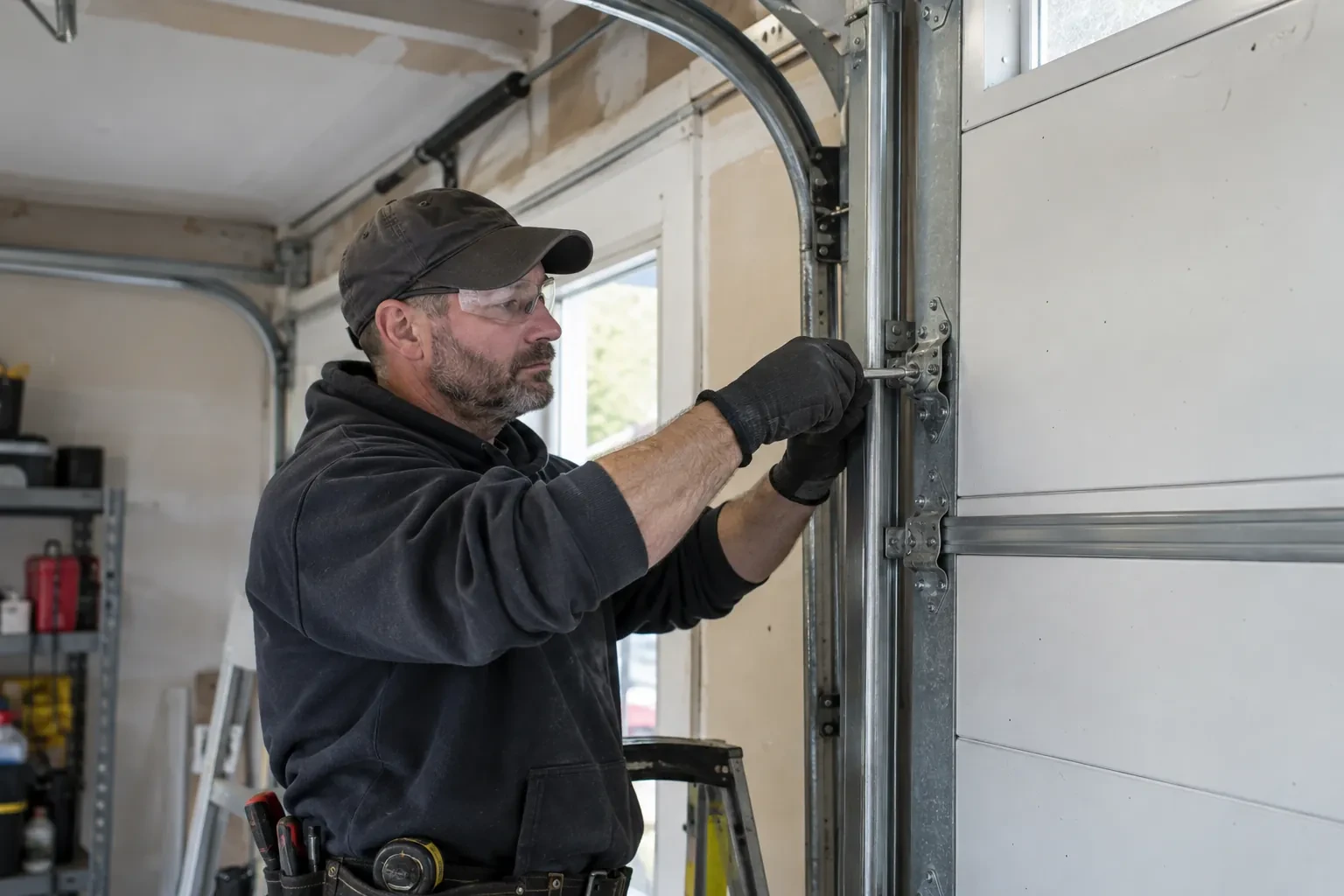
Technician in a dark cap and safety glasses holding a small metal tool against a hinge bracket on the vertical door track.
  1. Scene 1

    Inspecting the springs before any turns are added

    Adjustment only makes sense on a spring that is sound, so each one is examined closely. On a torsion system the technician looks for a gap in the coil, rust pitting, uneven coil spacing and a cone that has slipped on the shaft, and measures the wire size, inside diameter and length to confirm the spring suits the door's weight. On extension springs the check is for stretched or opened coils, a broken end loop and the presence of a containment cable. A spring that has simply lost a little tension can be wound up; one that is undersized or near the end of its cycle life is explained and offered as a replacement instead.

  2. Scene 2

    Fitting the opener to the balanced door

    Once the door holds at every height by hand, the opener is reconnected and treated as its own step. Its travel limits are checked so the door closes fully onto the floor and opens to the correct height without straining against the stops. The force settings are reviewed, and where they had been raised to cope with a heavy door they are brought back to a sensible level, because the door no longer needs the help. The photo eyes are cleaned and aligned. The technician then runs several powered cycles and listens for the motor working lightly and evenly through the whole travel.

  3. Scene 3

    A door that is nearly weightless again

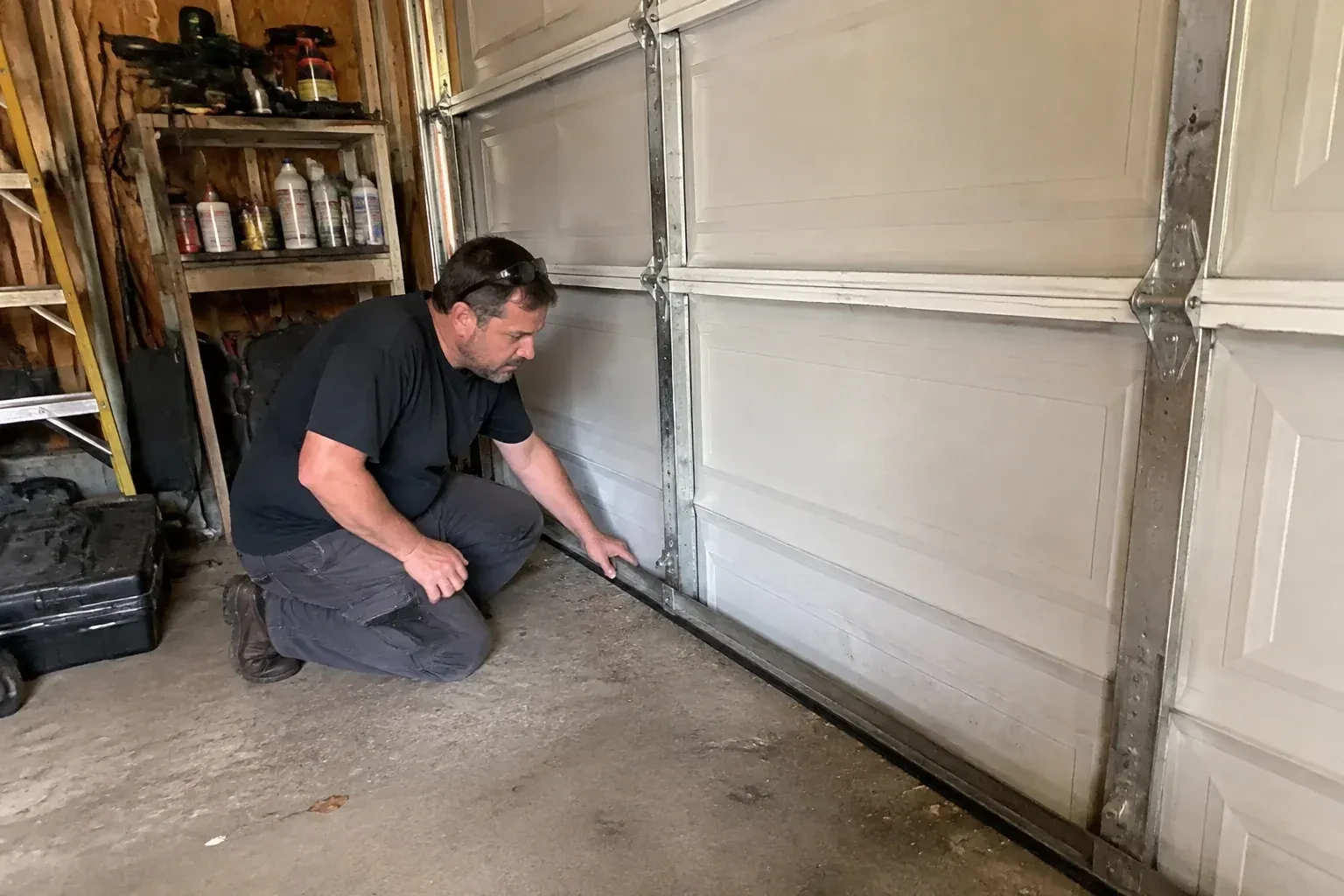
    The difference is obvious the first time you lift the door by hand. It rises with light effort, pauses when you stop it, and stays fully open without drifting down. Closing it, the bottom seal meets the slab evenly along its length instead of thudding at one corner. Under power, the opener runs quieter because it is guiding a balanced door rather than hauling one, and it stops reversing near the floor for no reason. The door also moves at the speed of your hand, neither racing ahead nor dragging, which is exactly what the industry checklist describes as correct operation.

In the van

  • Replacement hinges
  • Winding cone set screws
  • Lift cables
  • Track clamps or locking pliers
  • Door scale

What shapes the quoteLake Scugog Garage Door Repair Co.

Adjustment or replacement
If the inspection shows springs that can be wound to the door's weight, the quote covers adjustment. Springs that are undersized or worn out mean replacement, which is priced as separate work and explained first.
Torsion or extension springs
Winding a torsion spring with bars and moving an extension spring's hook are different procedures with different setup, and the type of counterbalance on your door is the first thing that shapes the quote.
Commercial or oversized doors
Doors wider or heavier than a standard residential opening use heavier springs, sometimes several on one shaft, and take longer to wind and test, which the quote reflects.

FeesSame any hour

Have it ready

Before you call · 0 / 3

(289) 513-8434

Before you book

Is this something I can do myself?

The hand test, yes, and it is a good habit. The adjustment itself is a job for a trained technician, because the springs, cables, drums and bottom brackets are under high tension whenever the door is closed, and the industry's own guidance reserves any change to them for someone with the right bars, clamps and method. Leaving that part to the visit keeps the whole thing uneventful.

What is the red cord hanging from the opener for?

It is the manual release. Pulling it disconnects the door from the opener's trolley so the door can be moved by hand, which is how the balance test is done and how you get the car out during a power cut. The industry standard calls for it to be red and reachable, no more than about six feet above the floor. Reconnecting is usually as simple as running the opener once.

Why does the door feel heavier in winter?

Cold stiffens the lubricant in the bearings and hinges and firms up the rubber seals, so the door drags a little more and the springs have slightly more to overcome. A bottom seal frozen to the slab adds to it, and this usually eases as temperatures rise. A door that stays heavy is worth a prompt check regardless of season, since persistent drag can come from binding, an obstructed track, rollers, hinges or cables as well as the spring balance.

Claringtoninformation

DurhamOntario

Town
Clarington, Durham
In business
12 years
Hours
Open 24/7
Nights, weekends and holidays, same fees
Visits
On-site assessment preferred. Request a visit or call.

2021 census: what it means at the door

Every square is one home in a hundred.

  • 27 in 100 homes · newer homes
  • About 27% of homes in Clarington were built in 1980 or earlier, according to the 2021 Census.Households in newer neighbourhoods often use the garage as the main entrance every day, which puts far more cycles on the door in a year than an older single door would see. A tune-up schedule matched to that use keeps the springs and opener working within their design.
  • Single-detached houses make up about 78% of homes in Clarington (2021 Census).In a neighbourhood of houses, each garage door is chosen by the household, so styles vary from one driveway to the next. When it is time for a new door, homeowners pick panel design, windows, colour and insulation freely, and we bring samples to compare against the siding.

Source: Statistics Canada, Census Profile

Open Clarington in Google Maps

On-site assessment

Request a visit.

With the door closed, daylight shows under one bottom corner and the seal is squashed flat at the other.

(289) 513-8434, open 24/7.