Sound familiar?Mitchell's Corners
- The call
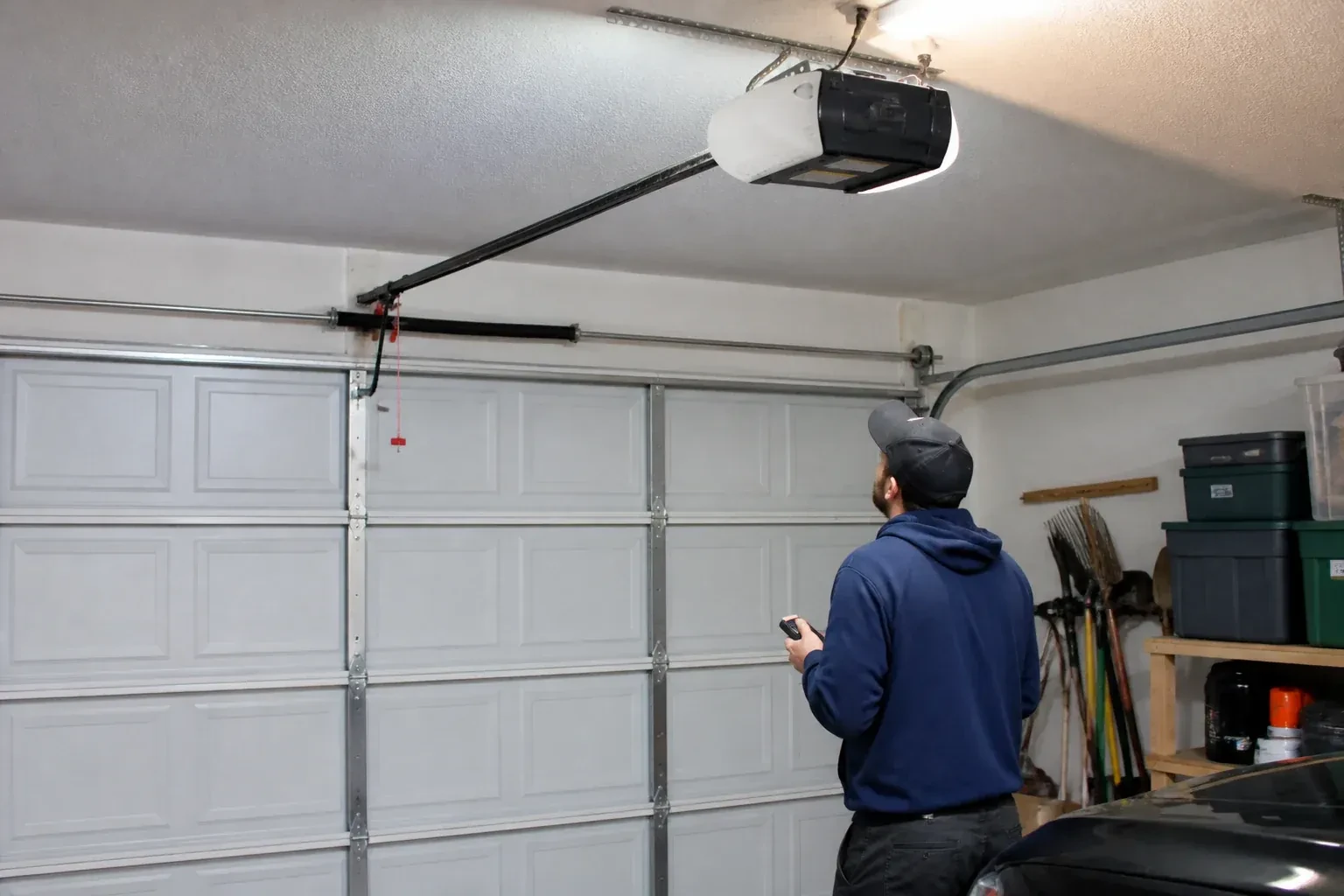
- The chain hangs in a loop under the rail and slaps against it on every cycle. It used to sit snug. Now the whole house hears the door leave, and the sound has a metallic clatter it never had before.
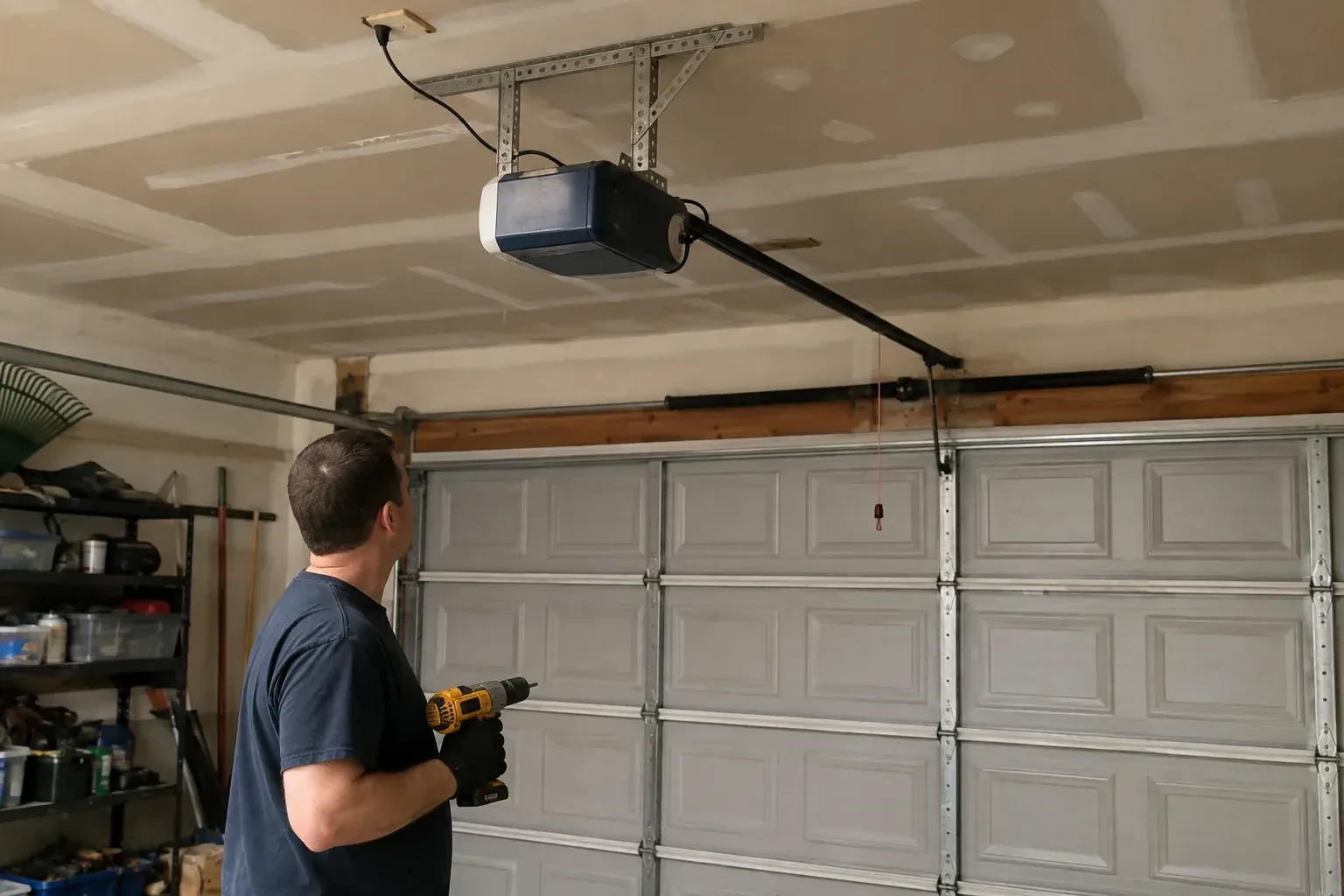
The chain hangs in a loop under the rail and slaps against it on every cycle. It used to sit snug.
The trolley is the carriage that rides the rail carrying the door arm, and many chain-drive calls end there. If travel limits creep, the trolley runs onto the stop bolt at the end of the rail and the motor hums against it. If the chain was run off the sprocket, the trolley and the motor disagree about where the door is, and the door travels partway no matter how the limits are turned. The technician frees the trolley, puts the chain back in phase with the motor's closed position, resets the limits and confirms the release lever picks the door arm up cleanly.
Sound familiar?Mitchell's Corners
Chain-Drive Opener Repair · Mitchell's Corners
Scene 1
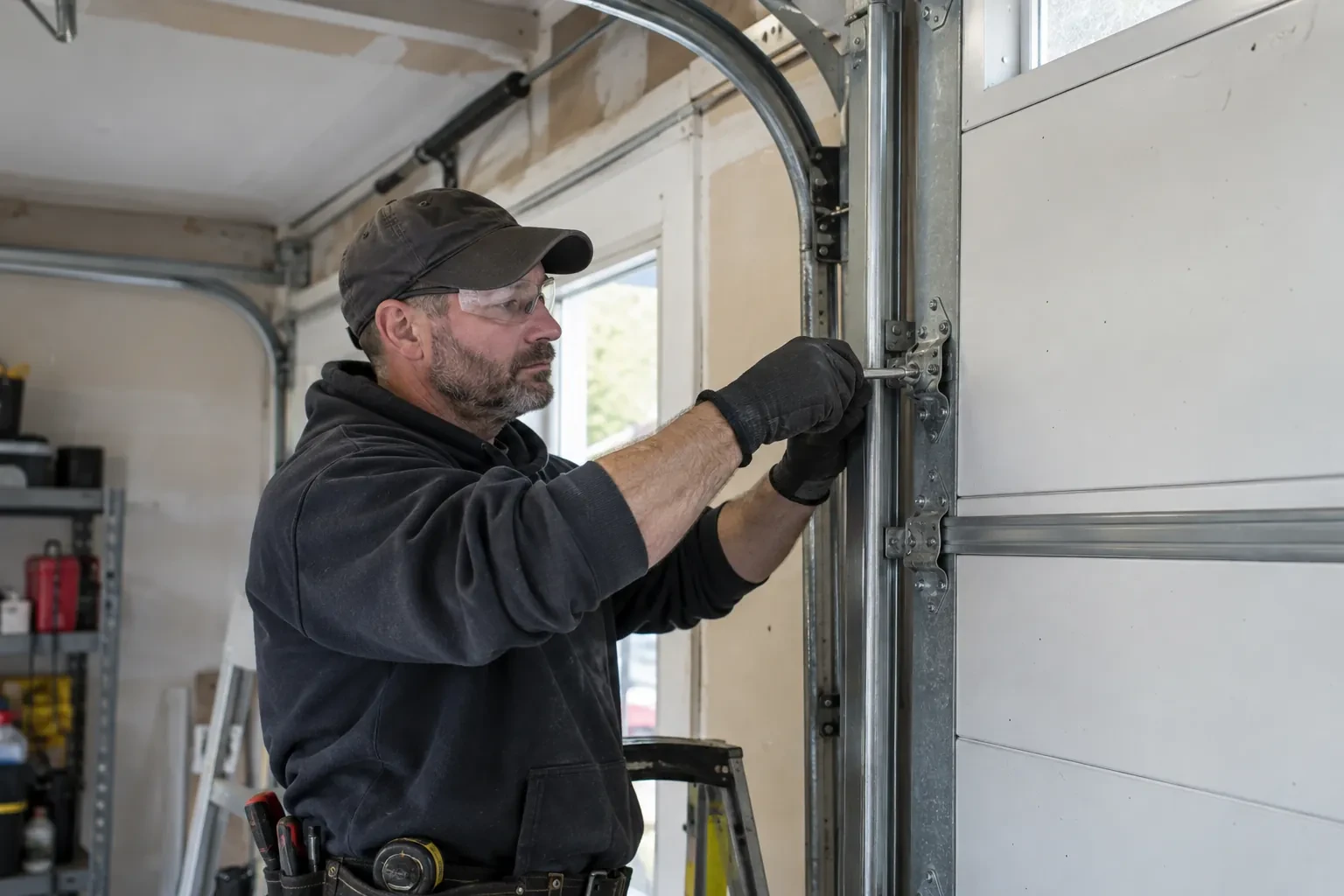
Two settings on the head decide the door's behaviour, and both are checked against what the door is doing. Travel limits set where the door stops in each direction; a door that stops shy of the floor, reverses on touching it or opens partway is out of adjustment. Force sets how much effort the operator treats as normal; too little and the door reverses for no reason, too much and the operator stops noticing an obstruction. The technician notes the current screw positions or the learned values, watches a full cycle and compares what the door does with what the settings say, before deciding whether the fault is in the drive parts or only in the settings.
Scene 2
If the drive has been run without the chain on the sprocket, the motor and the trolley disagree about the door's position and the door travels partway no matter how the limits are set. The technician slackens the chain and lifts it off the sprocket, then runs the operator and watches the sprocket: when it turns and stops on its own in the closed direction, the motor is at its closed position. The trolley is moved to the closed end of the rail, the chain is refitted over the sprocket, and tension is set. On some heads the internal limit assembly is aligned instead. The limits are then adjusted so the door reaches the floor and its full open height.
Scene 3
What you have afterwards is a chain that sits at its measured height, rides the sprocket without skipping and carries the trolley the full length of a rail that no longer moves. The door starts and stops where it should, meets the floor without bouncing back and opens to its full height. The sound settles to the steady run a chain drive is meant to have, with the slap, clack or grinding gone. The technician shows you the replaced parts so you can see what wore out, and runs the door for you a few times so you know what normal now sounds and looks like.
What shapes the quoteLake Scugog Garage Door Repair Co.
FeesSame any hour
Yes, a fair amount. Correct chain tension removes the slap. A new sprocket and chain remove the clack. Tight hangers, a level rail and a snug header bracket remove the rattle that travels through the framing into rooms above. Nylon rollers and lubricated hinges on the door quiet the door itself, which is often louder than the drive. A vibration isolator between the head and the hangers helps where the ceiling carries sound into a bedroom.
Often, yes. Gear kits, sprockets, chains and trolleys are still made for many older heads, and tension, phase and limits can be set on almost any unit. The limit is parts: some makers no longer support units made before the mid-1990s, and those also lack the photo-eye protection expected today. The technician checks parts availability for your model and lays out repair beside renewal so you can decide with the facts.
Look along the rail from the motor head to the door. A chain drive shows a steel roller chain, like a heavier bicycle chain, running along the top or inside a channel of the rail and over a toothed sprocket on top of the head. A belt drive has a flat rubber belt in the same place, and a screw drive has a threaded steel rod inside the rail with no chain or belt at all.
DurhamOntario
Chain-Drive Opener Repair · Clarington, Bowmanville, Burketon Station, Courtice, Enniskillen, Hampton, Haydon, Tyrone
Every square is one home in a hundred.
On-site assessment
The chain hangs in a loop under the rail and slaps against it on every cycle.
(289) 513-8434, open 24/7.
On-site assessment preferred · (289) 513-8434, open 24/7