Skip to content
LakeScugog Garage Door Repair Co.Open 24/7 (289) 513-8434
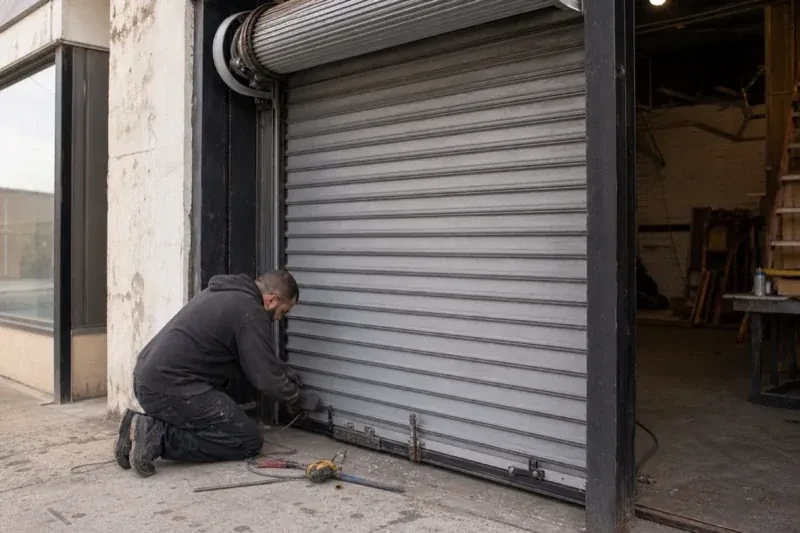
Person kneeling beside the bottom of a metal rolling door with tools on the ground — Commercial Rolling Door Repair, Clarington

New Doors · Clarington

Commercial Rolling Door Repair

The labelled rolling fire door still moves from its control, yet the release assembly and closing path were disturbed during nearby work. The facility needs the repair and return-to-service record handled as a fire-door scope.

In plain words

A rolling door that has become unusually heavy or starts to drift is asking for a counterbalance assessment. The barrel assembly commonly contains springs that offset curtain weight, and those parts hold substantial tension even while the door is stationary. The technician secures the curtain, examines brackets, bearings and drive components, then evaluates balance under controlled conditions. Adjustment uses purpose-made winding tools and the identified door instructions. Once the mechanical setting is correct, manual effort is checked across the full travel and any powered operator is tested without asking it to compensate for a poorly balanced door.

Sound familiar?Clarington

The call
The wall control asks the door to close, but the operator hums and stops. The curtain remains overhead while the control light and the photoelectric sensors suggest that the powered system needs a connected diagnosis.
NextHow the visit goes

Commercial Rolling Door Repair · Clarington

How the visit goes

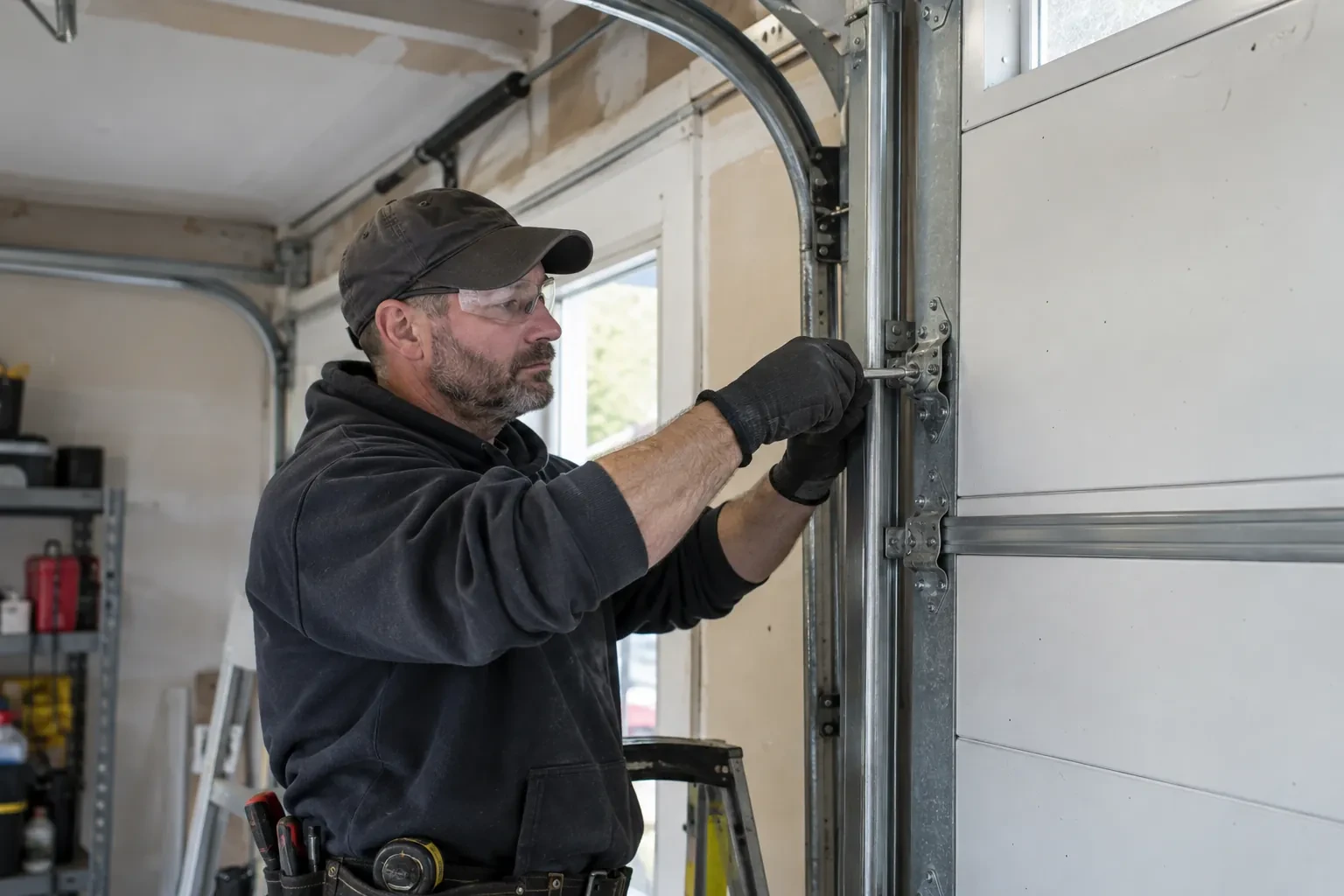
Technician in a dark cap and safety glasses holding a small metal tool against a hinge bracket on the vertical door track. — Clarington
  1. Scene 1

    Identify labels and special responsibilities

    Door, operator and component labels anchor the scope to a known assembly. Model information helps establish suitable slats, endlocks, controls and service instructions, while a fire-protection label changes how substitutions and testing are handled. The technician also notes whether an electrician, structural professional, fire-safety contact or access-control provider owns a connected task. Those boundaries are recorded before work is quoted. Clear identification prevents an ordinary rolling-service repair from absorbing alterations to a fire separation, power supply, building frame or security system without the information and authorisation those areas require.

  2. Scene 2

    Realign guides and attachments

    Bent or shifted guides are corrected from measured reference points rather than by forcing the curtain through them. The technician establishes the required gap, plumb and parallel relationship, then straightens or replaces authorised guide components and restores loose wall-angle or bracket fasteners. Bellmouths are shaped to receive the curtain cleanly, and guide stops are secured. If damaged masonry, steel framing or a moved jamb prevents reliable attachment, that condition is separated for the appropriate building work. Once the supports are sound, the curtain is centred and moved gradually to confirm even clearance on both sides.

  3. Scene 3

    A maintenance baseline for the facility

    The completed service record becomes the starting point for routine door care. It can list the installed door and operator, repaired components, observed wear, test results and the manufacturer's inspection interval. Facility checks focus on visible conditions: new rub marks, loose fasteners, damaged slats, uneven bottom-bar position, frayed wiring, dirty sensor faces and changes in sound or operating effort. Spring tension and internal repairs remain technician work. Scheduling periodic inspection around the actual cycle count, exposure and manufacturer guidance makes future conversations specific and allows small changes to be compared with a known condition.

In the van

  • Guides and bellmouths
  • Curtain slats and endlocks
  • Sensing edge and controls
  • Photoelectric sensors
  • Counterbalance spring assembly

What shapes the quoteLake Scugog Garage Door Repair Co.

Counterbalance condition
Spring adjustment, bearing service and replacement of worn barrel-related parts require different labour and controls. Door weight, spring arrangement and operating position shape the counterbalance plan.
Testing and documentation
Normal cycles, manual operation, protective responses, fire-door procedures and facility records vary by assembly. The proposal can name the demonstrations, measurements and written results included at handover.
Protective device scope
Photoelectric sensors, sensing edges, light arrays and vehicle-detection accessories serve defined roles. Quantity, mounting, wiring condition and operator requirements determine repair and test work.

FeesSame any hour

Have it ready

Before you call · 0 / 3

(289) 513-8434

Before you book

What does it mean when the door feels unusually heavy?

A marked increase in manual effort often calls for a counterbalance and mechanical-path assessment. Spring setting, barrel bearings, guide friction, curtain damage and drive parts can all contribute. Because the counterbalance contains substantial stored energy, the curtain is secured and the assembly is adjusted with the identified procedure and proper winding tools.

What makes a rolling door different from a sectional overhead door?

A rolling door uses interlocking slats or a flexible sheet that coils around a barrel above the opening. A sectional door uses hinged panels that travel along horizontal or vertical tracks. Their guides, counterbalance arrangements, clearances and repair parts differ, so identifying the construction before service is an important first step.

Why is there a grinding or clattering sound near the hood?

Noise at the head can come from worn barrel bearings, loose brackets, misaligned drive chain or sprockets, shifting slats, an uneven coil or hardware contacting the hood. The pattern matters: once per revolution suggests something different from continuous guide scrape. Controlled observation locates the source before a specific part is selected.

Claringtoninformation

DurhamOntario

Town
Clarington, Durham
In business
12 years
Hours
Open 24/7
Nights, weekends and holidays, same fees
Visits
On-site assessment preferred. Request a visit or call.

2021 census: what it means at the door

Every square is one home in a hundred.

  • 27 in 100 homes · newer homes
  • About 27% of homes in Clarington were built in 1980 or earlier, according to the 2021 Census.Households in newer neighbourhoods often use the garage as the main entrance every day, which puts far more cycles on the door in a year than an older single door would see. A tune-up schedule matched to that use keeps the springs and opener working within their design.
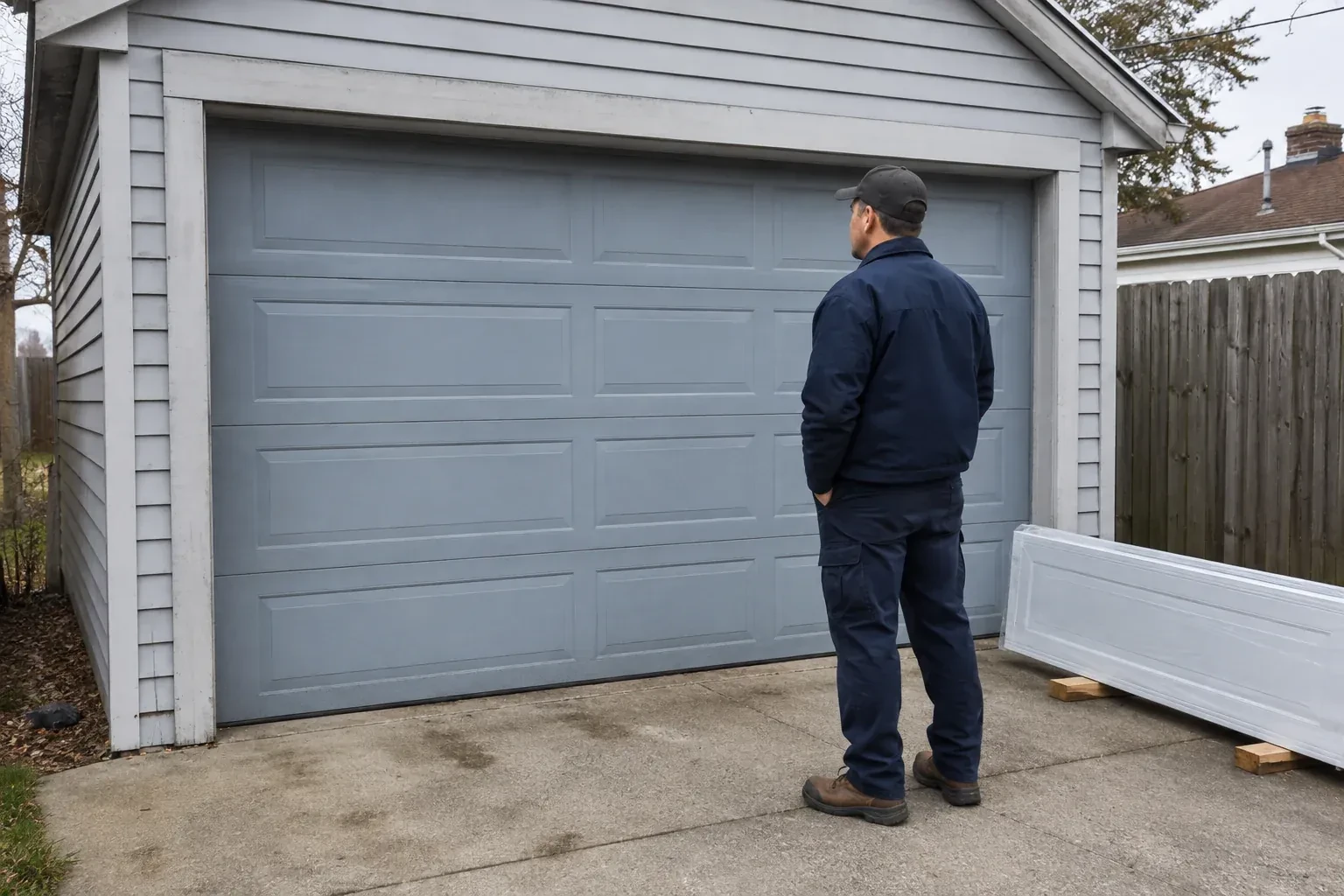
  • Single-detached houses make up about 78% of homes in Clarington (2021 Census).In a neighbourhood of houses, each garage door is chosen by the household, so styles vary from one driveway to the next. When it is time for a new door, homeowners pick panel design, windows, colour and insulation freely, and we bring samples to compare against the siding.

Source: Statistics Canada, Census Profile

Open Clarington in Google Maps

On-site assessment

Request a visit.

The labelled rolling fire door still moves from its control, yet the release assembly and closing path were disturbed during nearby work.

(289) 513-8434, open 24/7.