Sound familiar?Clarington
- The call
- The vinyl strip around the door used to be soft and white. Now it is grey and hard, cracked every few inches, and a piece near the corner snaps off in your fingers. It no longer bends toward the door at all.
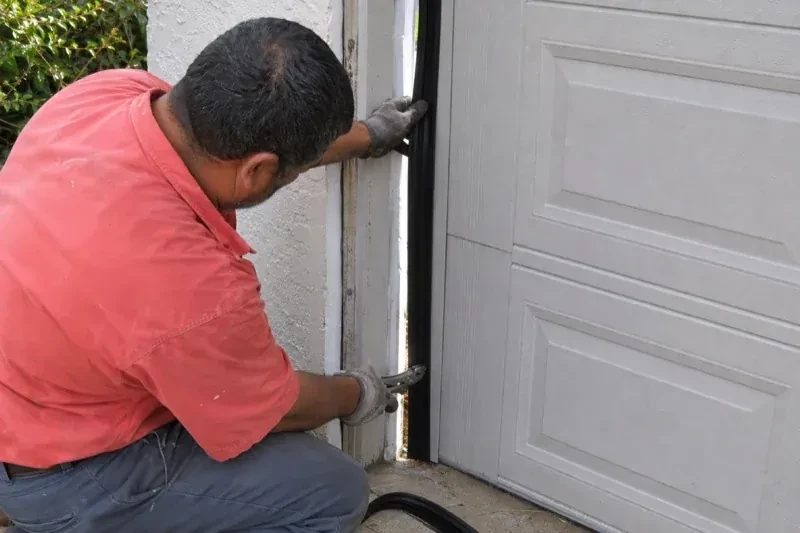
The new door went in last year and looks perfect, but the old wooden stop and its tired seal were left in place. Along the top there is a gap you could slide a finger into, and the cold pours through it.
Around a garage door there are three seals: one on the bottom edge of the door, and two running up the sides and across the top of the opening. Those last two are the perimeter weatherstrip. They are fixed to the stop moulding on the jambs and header, and their flexible fin rests against the door face when it is closed, closing the gap between door and frame. Replacing them means fitting new lengths that meet the door evenly, cutting down how much wind, driven snow, dust, leaves and small animals get through. The bottom seal is handled as its own job, but the two are often done together.
Sound familiar?Clarington
Garage Door Perimeter Weatherstrip · Clarington
Scene 1
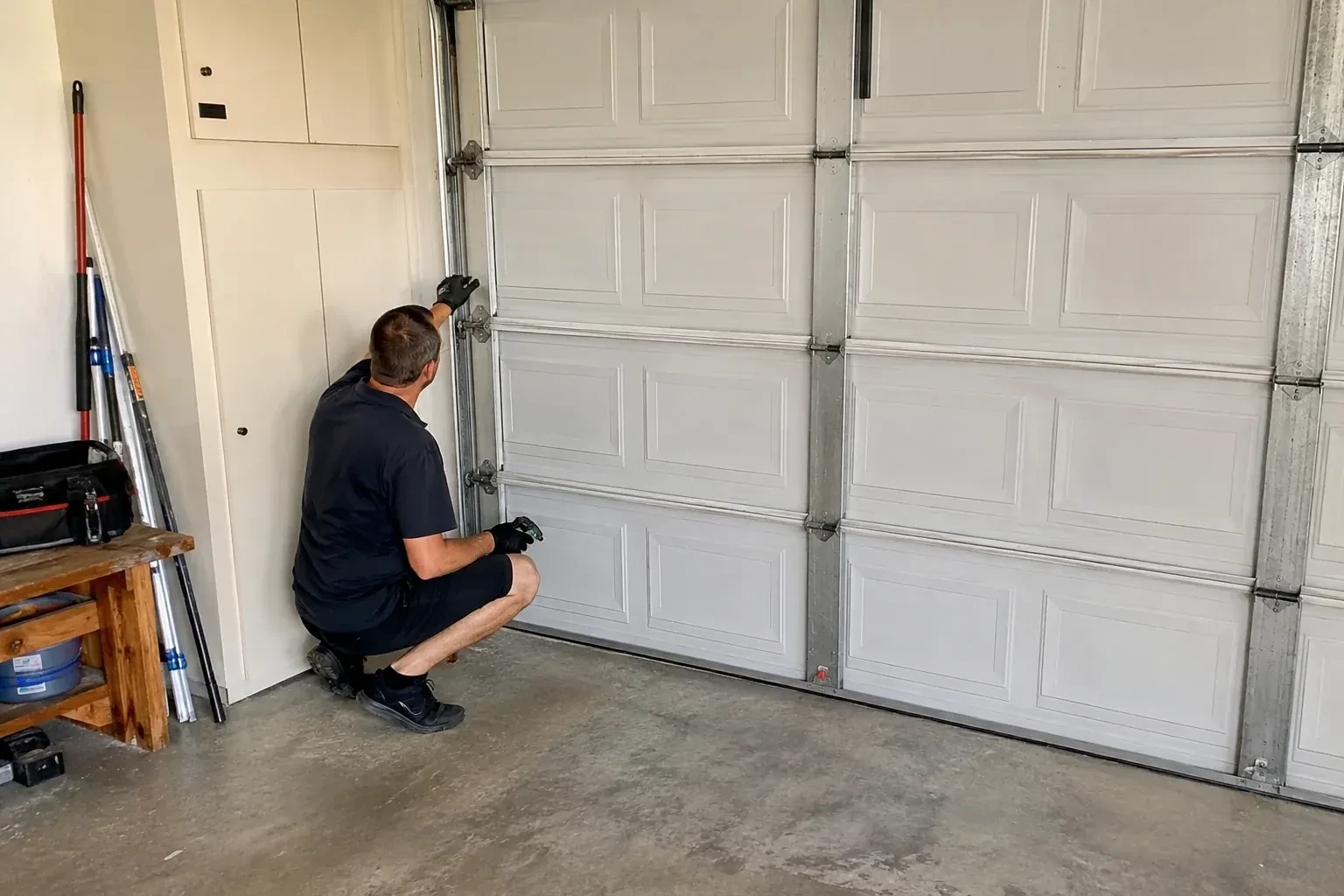
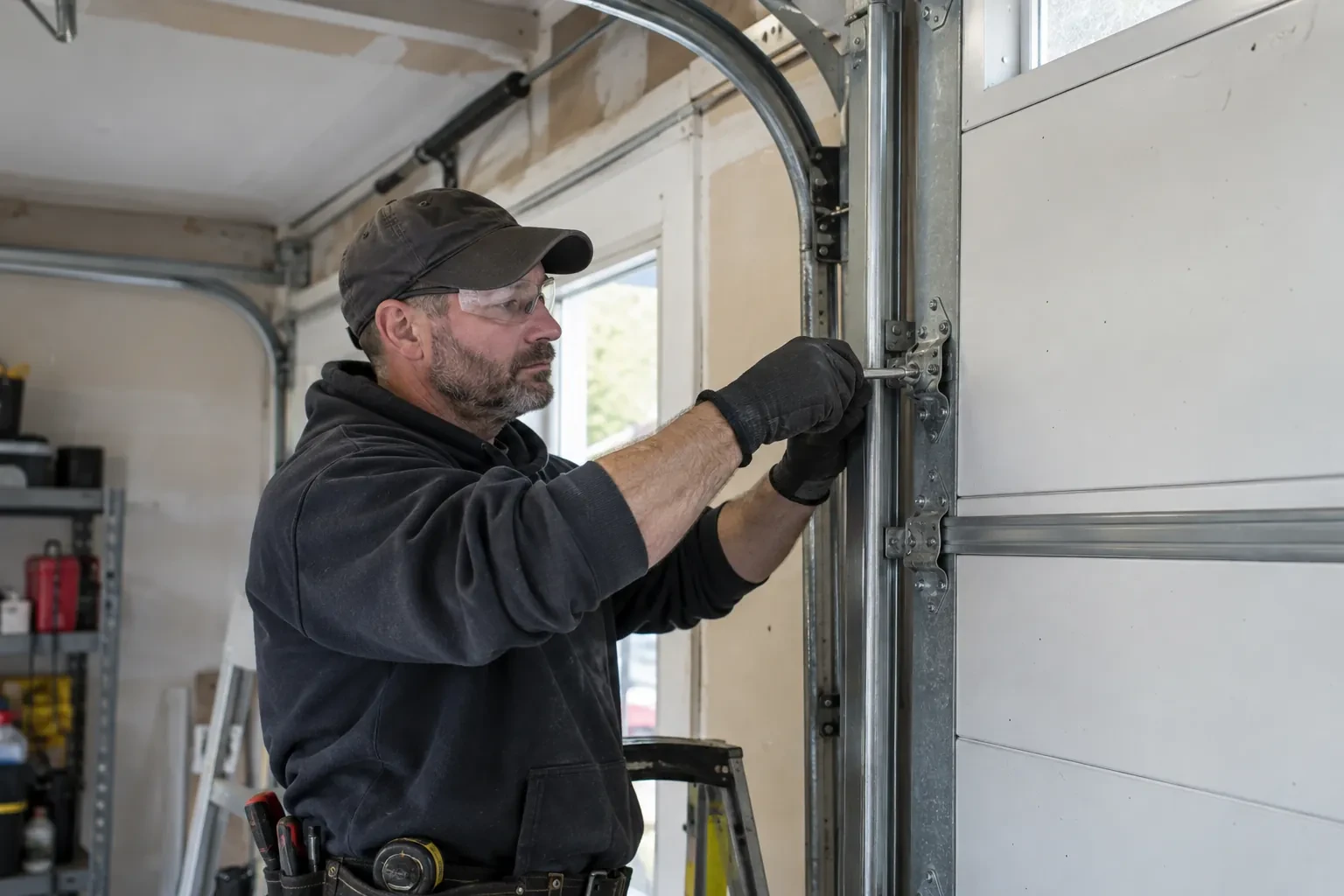
A perimeter seal can only follow a door that sits where the frame expects it, so the door is checked before any strip is ordered or cut. Each edge is checked for plumb, the gap to both jambs is compared, and the top section is watched as it meets the header to see whether it bows away or leans in. Rollers, hinges and the spacing of the vertical tracks are looked at because any of them can shift the door face toward one jamb and away from the other. Small corrections, such as re-setting a track bracket, are noted so the new seal is fitted to a door that closes square and stays that way.
Scene 2
When the old wood stop is cracked, rotten or buried in paint, it is replaced rather than covered. The one-piece stop, a rigid vinyl moulding with the flexible fin formed along one edge, is cut on a mitre saw to header and side lengths and fitted the same way, header first. It needs no paint, does not rot, and its fin and stop are one part, so the seal cannot peel away from the moulding. Corners are either mitred or the sides butted tight under the header with the fins overlapped. The result looks like fresh trim and works as a seal.
Scene 3
Before leaving, the technician tells you what went on: the seal type, the profile and fin width, the colour, and the lengths of the header and sides. It is worth writing this on a card near the opener or in the door's paperwork. If one length is ever damaged, by a ladder or a car mirror, the same profile can be matched and a single piece replaced rather than the whole set. If a jamb was repaired, the note records where and with what, so anyone painting or working on the frame later knows what is behind the finish.
What shapes the quoteLake Scugog Garage Door Repair Co.
FeesSame any hour
A straightforward fin replacement on a single door is often a matter of an hour or two once the technician is set up; a double door with a one-piece stop takes longer, and any jamb repair adds to it. Most of the time goes into checking the door, preparing the surface and setting the contact carefully, since those are what make the seal last. You are given a sense of the timing when the work is confirmed.
Paint the rigid parts only. A wood stop can be painted before the fin is fitted or with the fin masked, and a vinyl stop needs no paint at all. The flexible fin is left bare, because paint fills it and stiffens it, and a stiff fin cracks well before its time once cold weather sets in. Seals come in a range of colours so the fin can match the trim without a brush.
Most residential seals are flexible vinyl or a rubber compound formed into a fin that bends against the door. They come either as a flexible strip that is nailed to a wood stop or moulded onto a rigid vinyl stop as one piece. Commercial doors sometimes use an aluminum retainer holding a replaceable rubber insert, or a brush seal. Manufacturers make them to flex thousands of times as the door operates.
DurhamOntario
Garage Door Perimeter Weatherstrip · Bowmanville, Burketon Station, Courtice, Enniskillen, Hampton, Haydon, Mitchell's Corners, Tyrone
Every square is one home in a hundred.
On-site assessment
The new door went in last year and looks perfect, but the old wooden stop and its tired seal were left in place.
(289) 513-8434, open 24/7.
On-site assessment preferred · (289) 513-8434, open 24/7