Sound familiar?Clarington
- The call
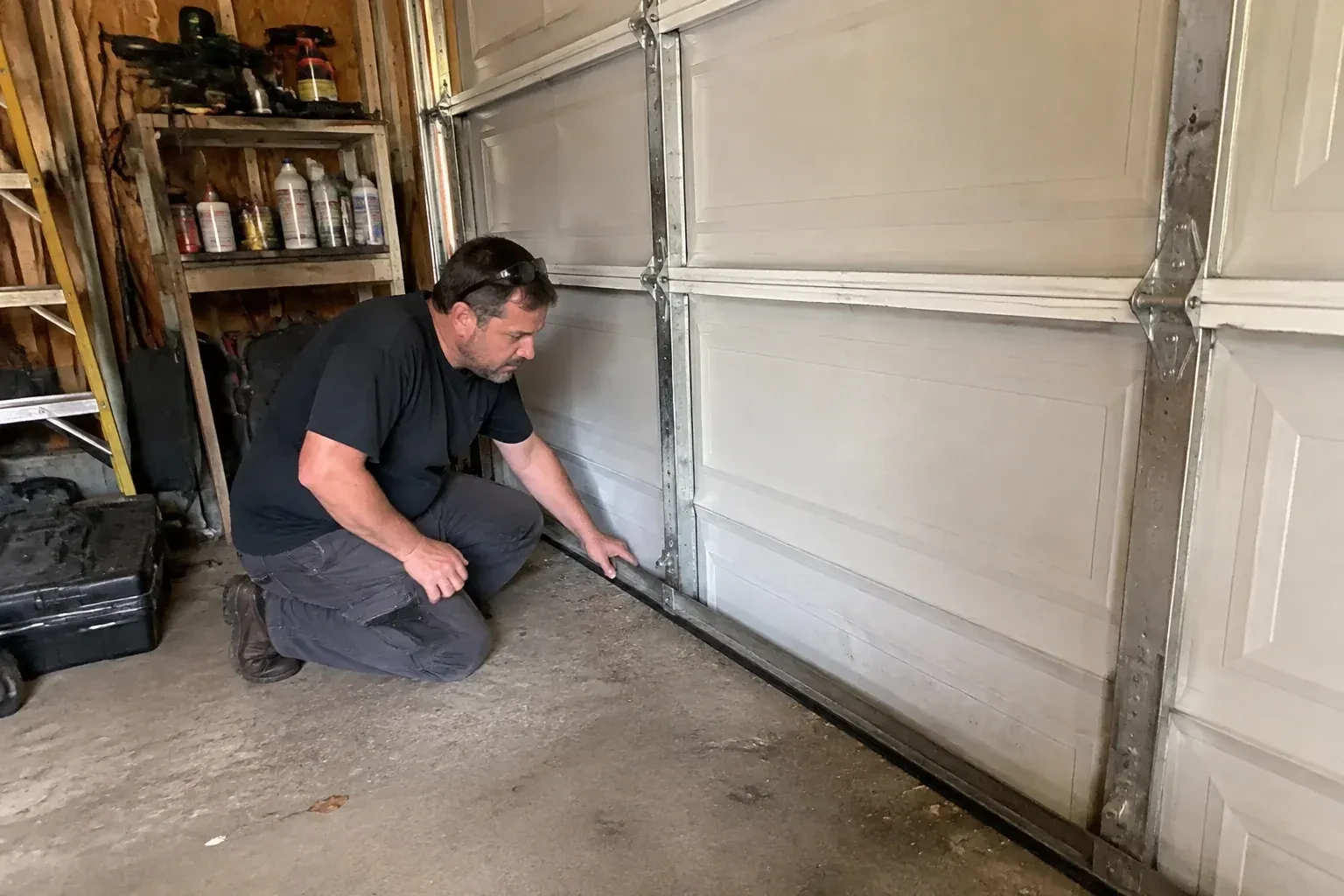
- Open the door by hand and it drifts back down on its own, a little at first and then all at once. Nothing is broken that you can see, but the springs along the tracks look tired, rusty and slightly sagging.
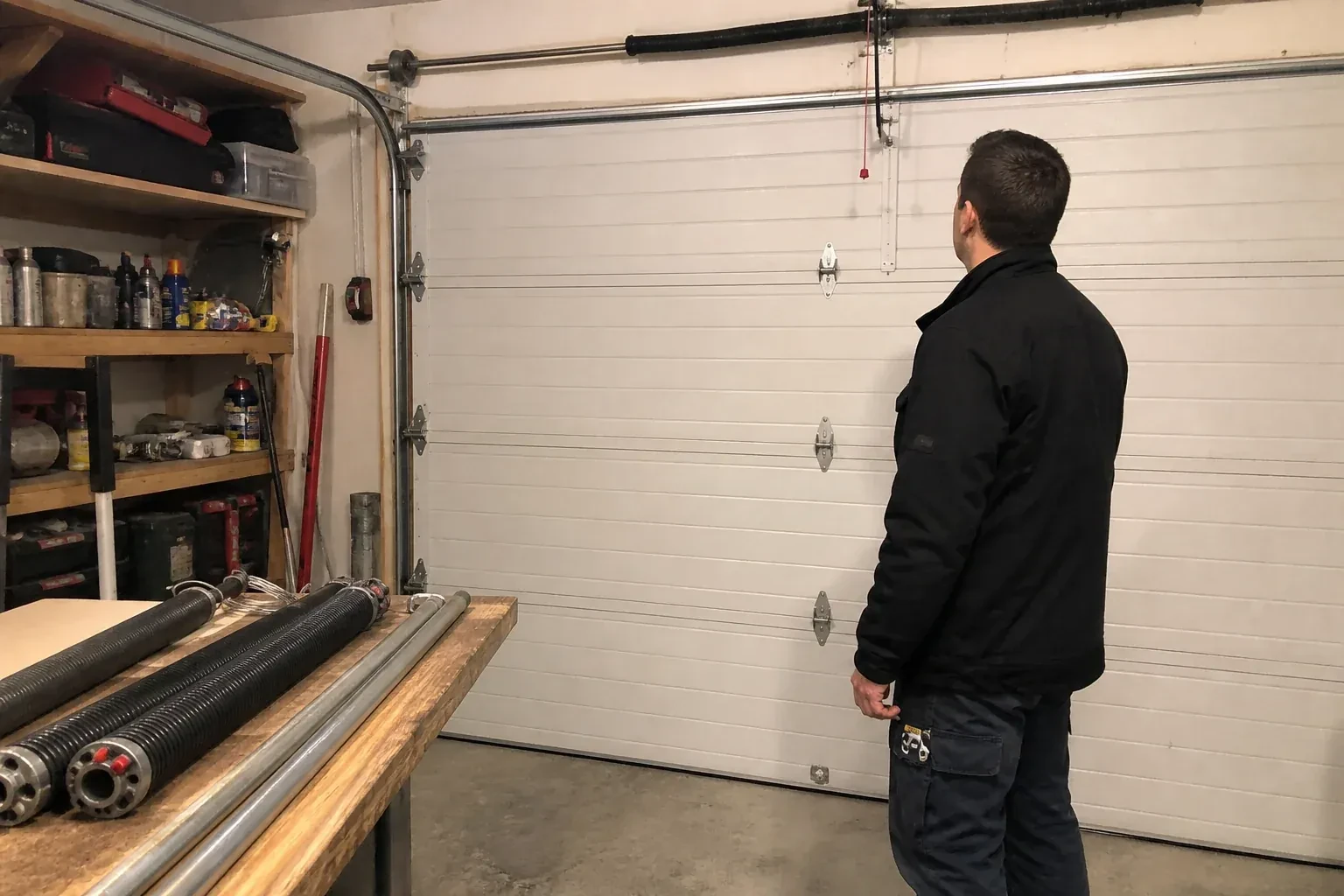
The home inspector's report on the house you are buying flags the garage door: extension springs with no safety cable running through them, coils showing rust, and a door that sank when he lifted it partway. The seller has never had it looked at.
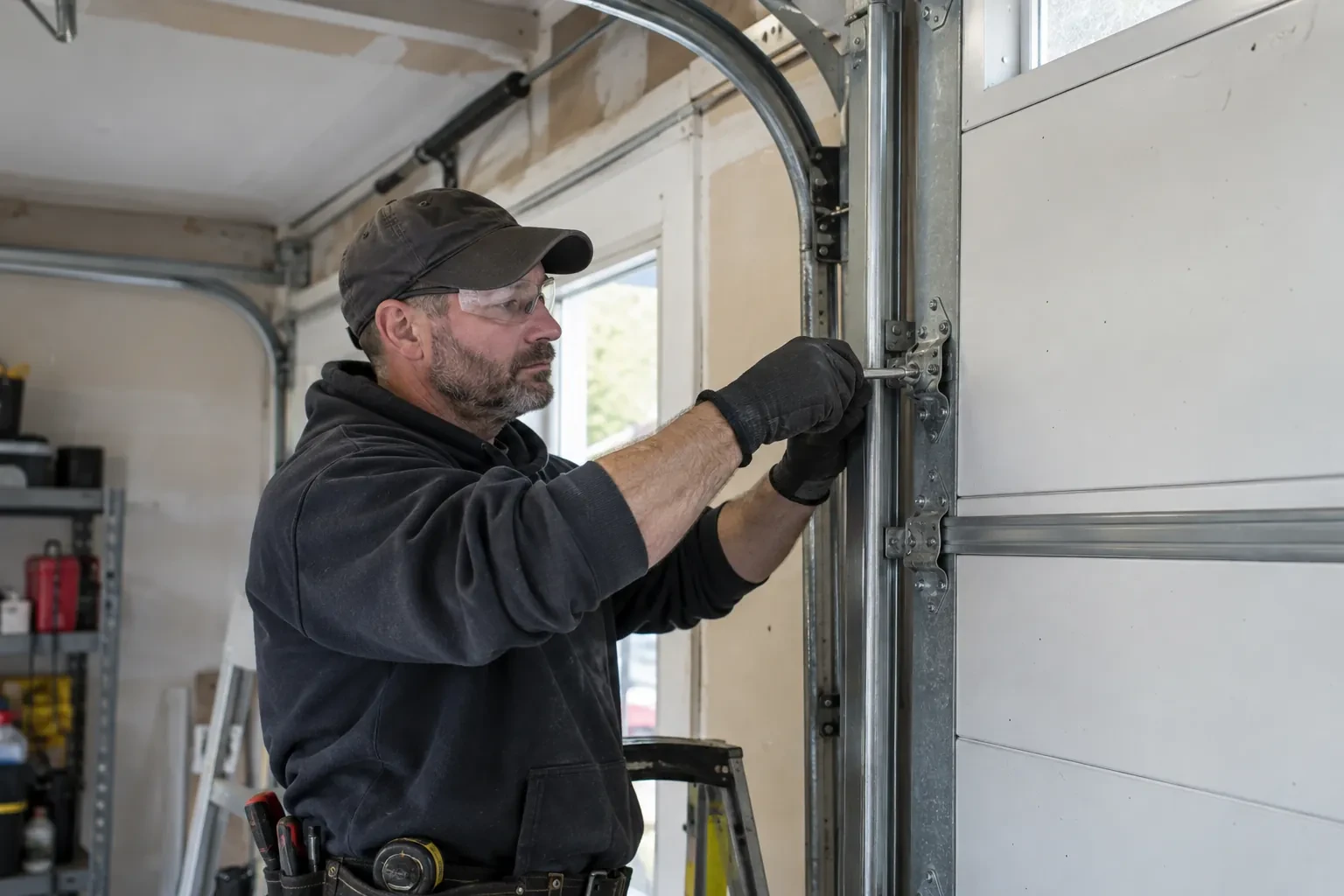
A spring visit follows a fixed order, so you know what to expect. The technician releases the opener, raises the door fully and clamps it, because an extension spring is at its slackest with the door open. Then both springs, the pulleys, cables, hangers and containment cables are inspected and the door is weighed. Old springs come off, new ones go on with containment cables threaded through, cables are routed over the pulleys and both sides are hooked at the same setting. The clamps come off, the door is balanced by hand, and only then is the opener reconnected, adjusted and put through its reversal tests.
Sound familiar?Clarington
Extension Spring Replacement · Clarington
Scene 1
Extension springs are chosen by the weight they are built to lift, so the door is weighed rather than guessed at. With the opener released and the springs disconnected or slack, the technician lowers the door onto a scale set on the floor under the bottom section and reads the figure. That number, together with the door's height, sets the spring rating and stretch length. The old springs are measured as a cross-check, but the scale wins if the two disagree, because a door can gain weight from new panels, insulation or a cladding added since the springs went on.
Scene 2
Each lift cable starts at the bottom bracket, where its loop goes over the pin or is secured with a clevis pin. From there it runs up the vertical track, over the fixed pulley at the front of the horizontal track, back along the track to the pulley on the end of the spring, around it, and forward again to the S-hook or adjusting clip at the front hanger. The technician keeps the cable seated in each pulley groove and makes sure it passes on the correct side of the containment cable and the track. Cables are renewed if the old ones showed any fraying or rust, and always as a pair of the same length.
Scene 3
Twice a year, in spring and before winter, a can of garage-door lubricant does most of the maintenance the springs need. Spray a light coat along each extension spring, working from the hanger to the pulley; it slows rust in a damp garage and quiets the coils. Put a drop on each pulley axle and on the bolts through the pulley forks, then on the hinge pins and roller stems. Leave the tracks dry and wipe them clean, since grease there collects grit and stops rollers rolling. Heavy grease and general-purpose oil are avoided on the springs because they hold moisture against the wire. Run the door a few times afterwards to spread the film.
What shapes the quoteLake Scugog Garage Door Repair Co.
FeesSame any hour
Sometimes, and it is worth asking. A torsion system needs room above the door opening for its shaft and a header that can carry the spring bracket, which many older garages with a low ceiling simply lack; extension springs are there for that reason. Where the headroom exists, a conversion is a separate job with its own hardware and quote. The technician can tell you on the spot which route suits your garage.
Some noise is ordinary. Extension springs stretch and relax on every trip, and a dry coil or a pulley with a dry axle will squeak, especially in cold weather; a light spray of lubricant along the springs and a drop on each pulley usually quiets it. A sharper twang, or a new grinding from a pulley, is worth a look, since a stiff pulley loads the spring and wears the cable.
They are inspected every time and changed when they show fraying, rust at the bottom loop, or a kink from having jumped a pulley. Cables and springs are generally the same age, and with the door already open and the springs off, fitting new cables adds little to the visit. Bright, tight strands with clean loops can stay and are simply re-routed over the pulleys and set to the new springs.
DurhamOntario
Extension Spring Replacement · Bowmanville, Burketon Station, Courtice, Enniskillen, Hampton, Haydon, Mitchell's Corners, Tyrone
Every square is one home in a hundred.
On-site assessment
The home inspector's report on the house you are buying flags the garage door: extension springs with no safety cable running through them, coils showing rust, and a door that sank when he lifted it…
(289) 513-8434, open 24/7.
On-site assessment preferred · (289) 513-8434, open 24/7