Skip to content
LakeScugog Garage Door Repair Co.Open 24/7 (289) 513-8434
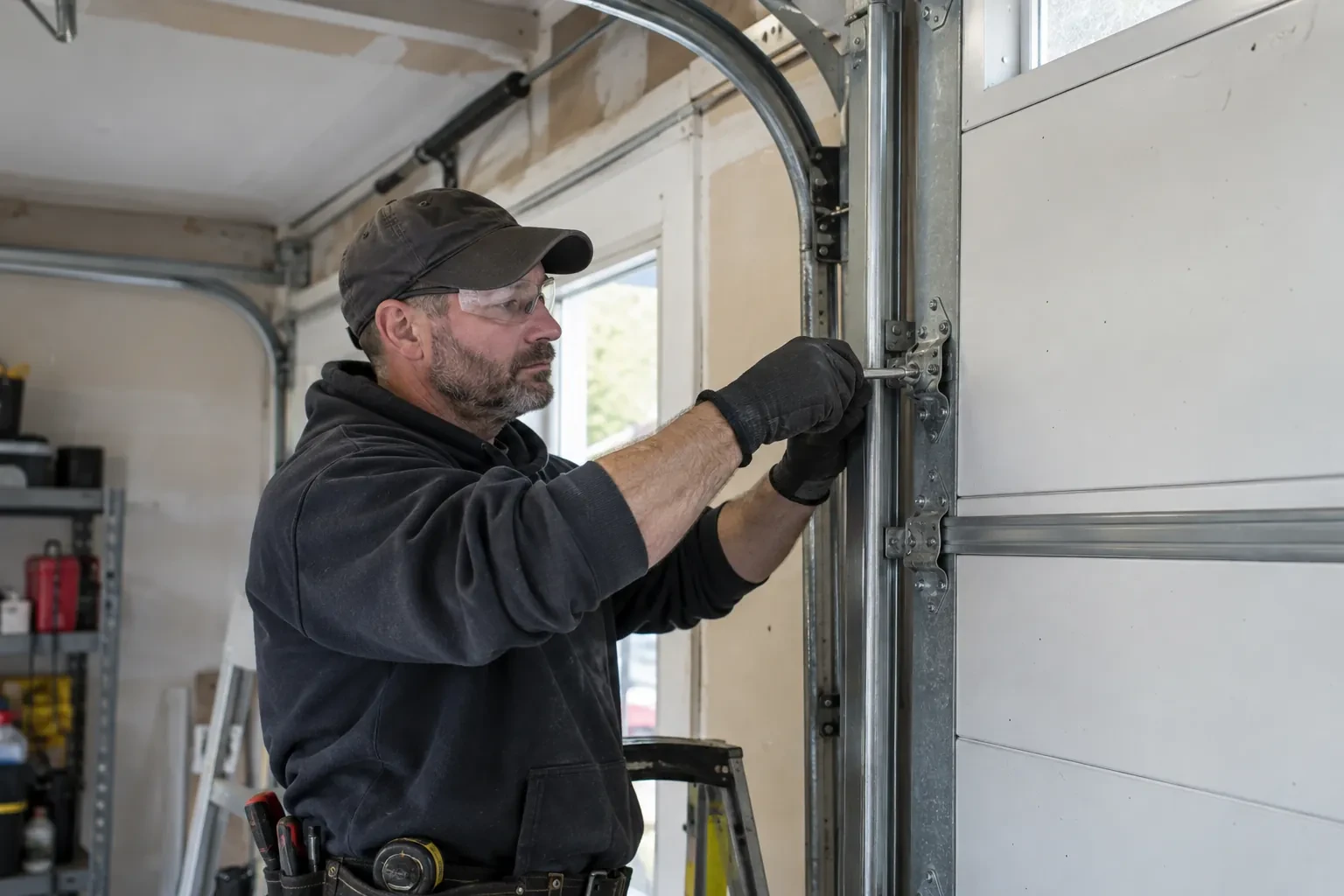
Technician in a dark cap and safety glasses holding a small metal tool against a hinge bracket on the vertical door track. — Clarington

Openers · Clarington

Emergency Release Repair

The power went out in the middle of an ice storm, the car is inside, and when you reach up for the red handle there is nothing there. A frayed stub of cord hangs from the trolley, well above your fingertips, and the door sits shut.

In plain words

Most households meet the release for the first time in a power outage, usually in winter. The door is shut, the car is inside, and the red handle is the only way to move the door. This service makes that moment go smoothly: a handle that hangs where a person can reach it, a cord strong enough to throw the lever, a trolley that lets go cleanly, and a door that lifts without a fight once it is free. The technician also shows everyone in the house the sequence, including how to hold the trolley out for a few days of manual use and how to reconnect afterwards.

Sound familiar?Clarington

The call
Someone pulled the cord last spring to get a car out during an outage, and the door has never properly rejoined the opener. Press the button and the trolley glides along the rail by itself while the door stays exactly where it is.
NextHow the visit goes

Emergency Release Repair · Clarington

How the visit goes

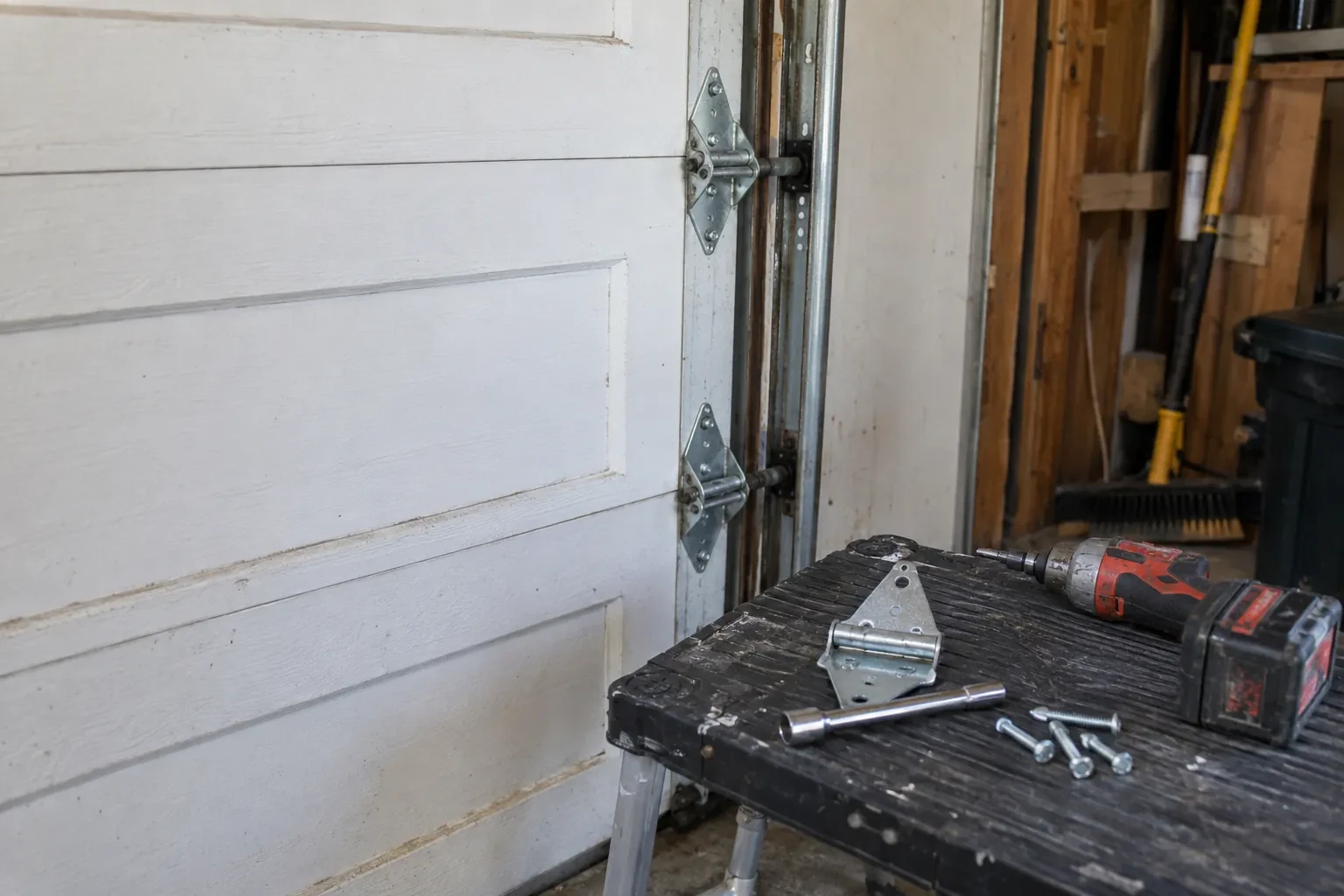
Two metal hinges on the edge of a white paneled door, with a spare hinge, screws and a drill on a bench. — Clarington
  1. Scene 1

    How the door behaves on its own

    The release is then pulled with the door closed and the door is lifted by hand, using the door's own handle or a gripping point clear of the section joints. This is the balance test, and it decides the order of the work. A door that rises with modest effort, holds at about a metre and stays fully open is ready for release work. A door that feels heavy, sinks back or springs upward is telling the technician that the counterbalance needs attention first, and the release is left disconnected until that is done. Manufacturers and the industry checklist both put this test ahead of any further use of the release.

  2. Scene 2

    Reconnecting and proving the latch

    Reconnection is done the way the maker describes for that unit. On most rails the cord is pulled toward the opener so the lever drops back to horizontal, then the opener is run and the trolley picks up the carriage with an audible click on the next cycle; on others the trolley re-latches when the door is lifted until it meets the carriage. The technician watches the join through a full open and close, then pulls the release and reconnects again to be sure the sequence repeats. You are shown what the click sounds like and what a trolley that has only half-latched looks like, so you can tell the two apart.

  3. Scene 3

    A monthly minute of checking

    The industry advice is to look over the door and opener about once a month, and the release fits into that habit. With the door closed, pull the handle and raise the door by hand to about halfway to feel that it moves freely and holds where you leave it; then lower it and reconnect. Follow with the reversal checks: the door should back off a length of 2x4 laid flat on the floor and reverse when something passes through the sensor beam. If the door ever feels heavier than it did today, or the trolley stops clicking home, that is the moment to call rather than to keep using it.

In the van

  • Trolley and carriage assembly
  • 2x4 offcut for the reversal test
  • Track clamps to hold the door
  • Hole saw for the top section
  • Outside key release kit (lock, cable, keys)

What shapes the quoteLake Scugog Garage Door Repair Co.

Time of the call
A weekday daytime visit and an evening, weekend or holiday one cost the same amount for freeing or repairing an emergency release. The exact figure is confirmed once the technician has seen the trolley, the cord or lever, and how the door was left.
Door work found by the balance test
If the disconnected door proves heavy or drifting, spring, cable or roller work comes before the release is put back into use, and that door-side work is quoted as its own item.
Number of doors and openers
A double garage with two openers, or a house with a detached garage as well, means two releases to check and possibly two sets of parts, and the quote counts each.

FeesSame any hour

Have it ready

Before you call · 0 / 3

(289) 513-8434

Before you book

How long does an emergency release repair take?

A cord and handle, a lever spring or a trolley freed from the stop bolt is a modest part of an hour, including the balance test and reversal tests. Replacing a trolley or fitting an outside key release takes longer, since the drive is slackened and re-tensioned or a hole is cut in the door. If the balance test finds the springs need work first, that is a separate piece of the visit, and you are told before it starts.

What is an outside key release, and should I add one?

It is a keyed cylinder, mounted through the top section on a sectional door or at mid-height on others, with a cable running back to the trolley lever. Turn the key, pull the cylinder, and the door is free to lift from the driveway. It earns its place on any garage where the overhead door is the only way in, especially a detached garage. It can be fitted during the same visit, with two keys, once the door and opener are checked for a compatible kit.

What happens if someone pulled the release while the door was open?

Sometimes nothing, if the door is well balanced and stayed where it was. If the door came down on its own, the technician checks what took the impact: the door arm, the carriage, the bottom brackets, the rollers and the panel around the arm bracket. A bent arm or carriage is replaced, and the balance test shows whether the springs contributed. Then the release is reconnected with the door closed and the household is shown the right sequence.

Claringtoninformation

DurhamOntario

Town
Clarington, Durham
In business
12 years
Hours
Open 24/7
Nights, weekends and holidays, same fees
Visits
On-site assessment preferred. Request a visit or call.

2021 census: what it means at the door

Every square is one home in a hundred.

  • 27 in 100 homes · newer homes
  • About 27% of homes in Clarington were built in 1980 or earlier, according to the 2021 Census.Households in newer neighbourhoods often use the garage as the main entrance every day, which puts far more cycles on the door in a year than an older single door would see. A tune-up schedule matched to that use keeps the springs and opener working within their design.
  • Single-detached houses make up about 78% of homes in Clarington (2021 Census).In a neighbourhood of houses, each garage door is chosen by the household, so styles vary from one driveway to the next. When it is time for a new door, homeowners pick panel design, windows, colour and insulation freely, and we bring samples to compare against the siding.

Source: Statistics Canada, Census Profile

Open Clarington in Google Maps

On-site assessment

Request a visit.

The power went out in the middle of an ice storm, the car is inside, and when you reach up for the red handle there is nothing there.

(289) 513-8434, open 24/7.